A roofing emergency doesn't wait for business hours. A tree limb through the master bedroom ceiling at 11 pm, a violent thunderstorm that strips a 20-foot section of shingles on a Tuesday night in July, or ice dam water actively streaming through a ceiling light fixture on a January morning — these situations demand an immediate response, not a callback in two business days. In Hinsdale and the surrounding DuPage County area, severe weather events are a seasonal reality, not a rare occurrence.
The difference between a roofing emergency and a costly disaster is how quickly the structure is secured. Water entering through an open roof penetrates ceiling drywall, saturates insulation, runs down wall cavities, and can reach finished living spaces, electronics, and valuables within hours. Mold can establish within 24–48 hours in a warm, wet environment. Every hour the roof remains open compounds the total damage bill.
Hinsdale Roofing Pros maintains connections to roofing contractors who offer emergency response services throughout Hinsdale, Clarendon Hills, Burr Ridge, Western Springs, and wider DuPage County. We'll match you as quickly as possible with an independent local contractor who can deploy tarping and emergency stabilization while a permanent repair is scheduled.
What Constitutes a Roofing Emergency
Not every roofing problem requires an emergency response, but several situations clearly do. Understanding the threshold helps homeowners make fast, appropriate decisions when they're dealing with the stress of sudden damage.
- Active water intrusion through the ceiling, especially near electrical fixtures or in large volumes
- Physical breach of the roof deck — fallen tree limb, large debris impact, or structural collapse
- Large sections of shingles or membrane removed by wind, exposing bare decking
- Sudden catastrophic flashing failure around a chimney or skylight with water streaming in
- Ice dam overflow causing visible water entry along exterior walls
- Any structural deformation — sagging ridge line, collapsed section, or visible rafter damage
Emergency Tarping: The First Line of Defense
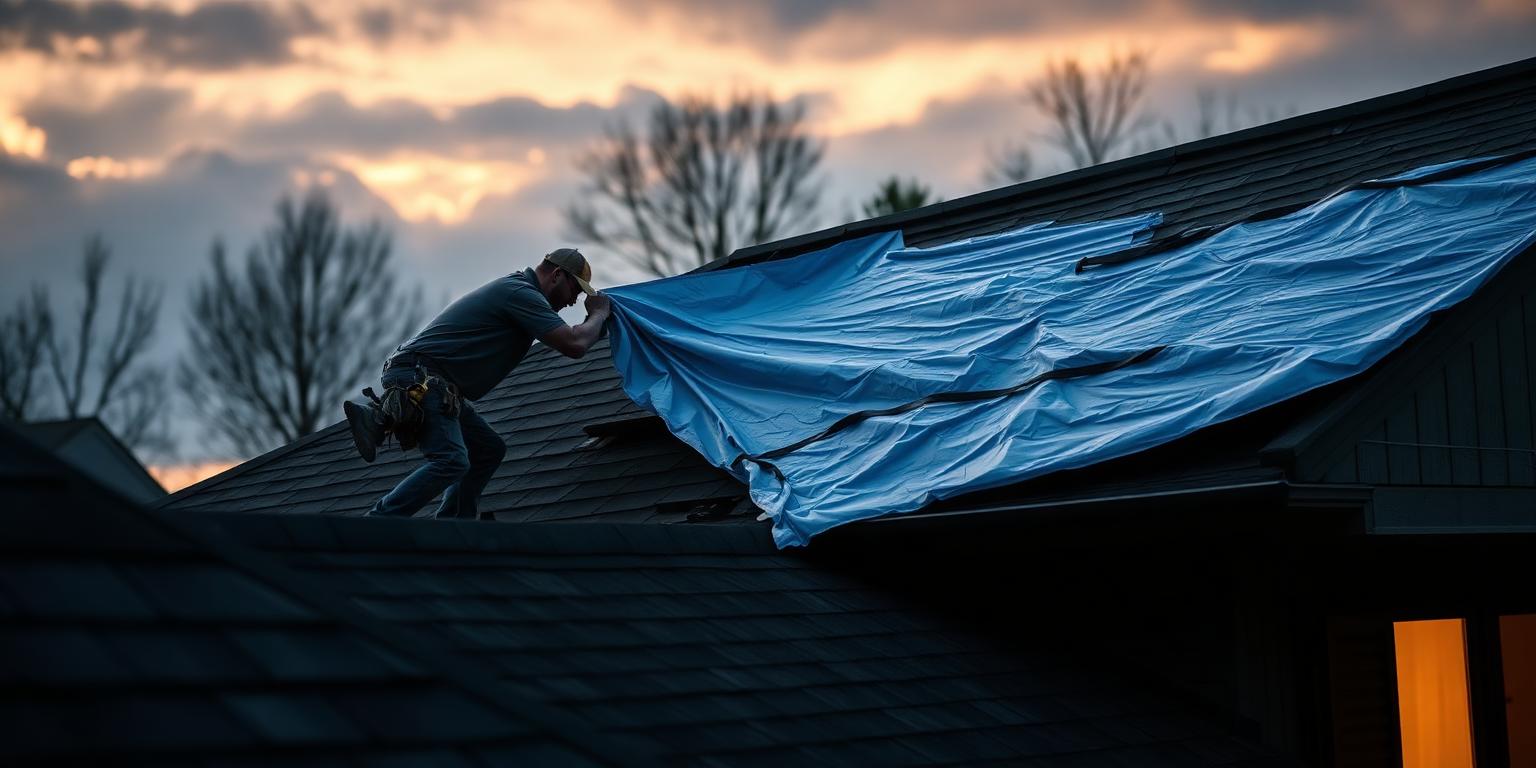
The most critical immediate action for an open roof is installing a heavy-duty tarp to seal the penetration against further water entry. Contractors in our network use commercial-grade polyethylene tarps secured with battens or weighted edges — not the lightweight tarps available at hardware stores that tear apart in wind within hours. The goal is a watertight barrier that holds through the next rain event while a permanent repair is scoped and scheduled.
Tarping an occupied Hinsdale home in the middle of the night requires skill and safety awareness. Contractors who offer emergency response are equipped for nighttime work and understand the hazards of damaged roof structures — areas you should absolutely not attempt to access yourself after a significant event.
Limiting Interior Damage While Help Is on the Way
While waiting for an emergency contractor to arrive, there are steps you can safely take to minimize interior damage. Move valuables and electronics away from the affected area, place buckets under active drips, use towels or blankets to redirect water away from walls and flooring, and take photos of the damage as it stands — this documentation will be valuable for your insurance claim.
Do not attempt to get on the roof yourself, especially after a storm. Damaged roofing materials are unstable, nighttime conditions reduce visibility, and wet surfaces are extremely slippery. The contractors in our network are trained and equipped for this work; your safety is worth waiting the extra time for a professional.
Ready for a no-obligation estimate?
Get matched with trusted local emergency roofing professionals in Hinsdale and DuPage County.
Insurance Coverage for Emergency Roofing
Standard homeowners insurance policies in Illinois cover emergency roofing response costs — tarping, board-up, and temporary stabilization — as part of the mitigation obligation embedded in most policies. You are typically required by your policy to take reasonable steps to prevent further damage after a storm, and emergency tarping is the primary method. Keep all receipts and document everything with photos.
When you file your claim, emergency response costs should be included in the total claim amount. Ask your contractor for detailed written invoices for emergency work, formatted for insurance claim submission. Having an emergency contractor connected to Hinsdale Roofing Pros also means you have someone experienced in insurance documentation from the very first hour.
From Emergency Response to Permanent Repair
A good emergency response isn't just about tarping — it sets the foundation for the full repair or replacement process. After securing the structure, the contractor will conduct a complete damage assessment, document everything for insurance purposes, and outline your repair or replacement options with realistic timelines. In Hinsdale's post-storm environment, where contractor availability can tighten quickly, being ahead of the scheduling queue matters.
Ask your contractor to confirm they will handle the work from emergency stabilization through the permanent solution, so documentation and scheduling stay with one company.
Frequently Asked Questions
Common emergency roofing questions from Hinsdale homeowners.