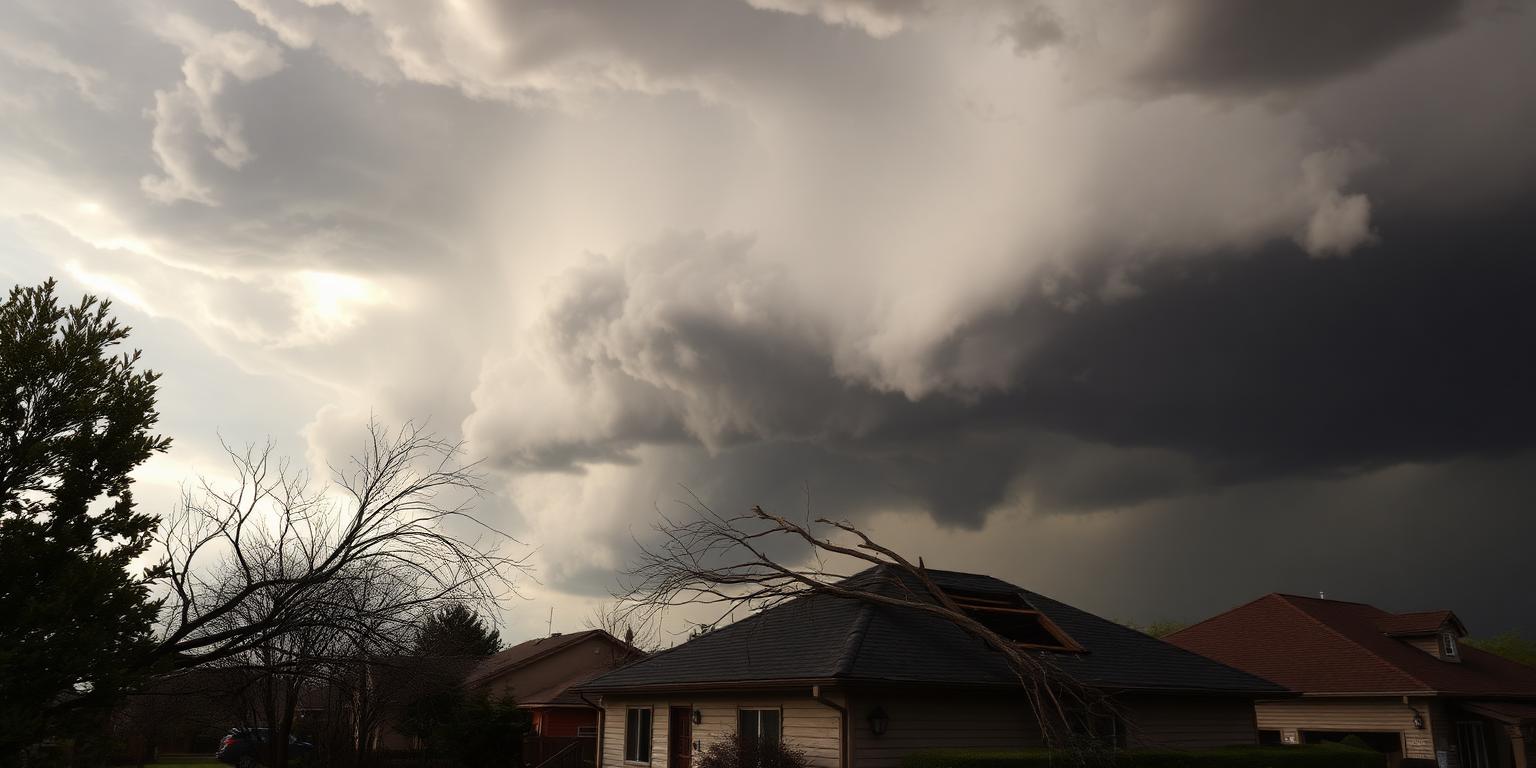
DuPage County sits squarely in the corridor of severe weather that strikes the Chicago suburbs from April through October. Straight-line wind events regularly top 60 mph across the western suburbs, ripping shingles free, snapping tree branches onto rooftops, and sending debris airborne. The National Weather Service regularly issues severe thunderstorm warnings for Hinsdale and surrounding communities like Westmont and Darien — and when those storms pass through, they leave a trail of roof damage that needs immediate professional attention.
Storm damage is deceptive. A roof that looks intact from the street may have dozens of cracked shingles, lifted ridge caps, or compromised flashing that won't reveal itself until the next rain event — by which point interior damage has already begun. Early professional assessment is the single most important step a homeowner can take after any significant storm.
Hinsdale Roofing Pros connects homeowners with independent local contractors who specialize in post-storm damage assessment, emergency tarping, and both repair and replacement work. We're a free matching service, and the contractors in our network are experienced at working with homeowners insurance claims from the very first call.
Storm cells that clip Hinsdale often track straight through neighboring communities, so damage patterns rarely stop at the village line. If your property is west of I-294, see our Westmont roofing storm damage guide for what the same wind and hail events typically do to roofs in that area.
Types of Storm Damage We Help Address
Not all storm damage looks the same. Hinsdale roofs face several distinct damage patterns depending on the type of weather event that caused them, and the contractors in our network are trained to identify each.
- Wind damage — missing shingles, lifted ridge caps, torn flashing, and cracked ridge vents
- Falling debris — branch punctures, scrapes, and dents to shingles and metal components
- Rain intrusion — water penetrating through pre-existing weak points exposed by wind
- Hail damage — cracked shingles, bruised asphalt, and dented metal (see our dedicated hail damage page)
- Ice dam damage — lifted shingles, wet insulation, and water-stained ceilings from freeze-thaw cycles
- Tornado or microburst damage — large sections of roofing removed, structural decking exposed
The Importance of a Professional Damage Assessment
After a storm passes through Hinsdale, the safest and most valuable thing you can do is have a qualified contractor walk your roof — not attempt it yourself. Wet, damaged roofing is unstable, and the scope of damage is rarely obvious from the ground. The contractors in our network use drone technology and direct physical inspection to document every issue comprehensively.
A thorough written assessment serves two purposes: it gives you a clear picture of what needs to be fixed, and it provides the documentation your homeowners insurance company will require when you file a claim. Contractors who skip this step — or provide only a verbal estimate — put you at a disadvantage with your insurer.
Emergency Tarping and Temporary Protection
When a storm leaves your roof open to the elements, hours matter. Water entering through exposed decking can saturate insulation, penetrate wall cavities, and begin fostering mold growth within days. Contractors in our network offer emergency tarping services to secure the structure while permanent repairs are scoped and scheduled.
Tarping costs are generally covered by homeowners insurance as part of the mitigation requirement — your policy typically obligates you to take reasonable steps to prevent further damage after a storm event. Keep receipts and photos of any emergency measures you take.
Navigating Your Insurance Claim
Storm damage claims are among the most common homeowners insurance claims filed in DuPage County. The process begins with reporting the claim to your insurer, who will send an adjuster to assess the damage. Having a contractor-prepared damage report in hand before the adjuster arrives puts you in a much stronger position — adjusters work quickly and may miss items that an experienced contractor would catch.
The contractors in our network will attend the adjuster inspection if you request it, pointing out damage the adjuster might otherwise overlook and ensuring the approved scope covers everything needed for a complete, code-compliant repair or replacement. If your claim is initially denied or underpaid, your contractor can prepare a supplemental claim with additional documentation.
Why Acting Fast Matters in Hinsdale
Illinois homeowners insurance policies typically require claims to be filed within a reasonable timeframe — often one year from the date of the storm event, though exact language varies by policy. More urgently, storm damage left unaddressed through another weather cycle — especially a Midwest winter — can compound dramatically. Ice forming in a cracked shingle section, water infiltrating damaged flashing, and debris accumulating in broken valleys all accelerate deterioration.
After major regional storms, contractor availability tightens quickly as demand spikes across DuPage County. Submitting your request early helps ensure you're matched with a responsive contractor before backlogs develop.
Step 1: Initial Damage Diagnosis
After a wind or hail event, the first goal is establishing what actually happened to the roof, not scheduling repairs. From the ground you can usually spot missing or creased shingle tabs, displaced ridge caps, granules washed into downspout splash blocks, and dents in gutters, downspouts, and vent hoods — soft metals bruise before shingles do, so they are a reliable indicator. Inside, check the attic with a flashlight for daylight, damp sheathing, or wet insulation.
Leave roof-surface inspection to a contractor with fall protection. A qualified assessment covers all slopes, the flashing at chimneys and walls, the condition of pipe boots and vents, and whether hail bruising has fractured the shingle mat rather than simply knocking granules loose.
Ready for a no-obligation estimate?
Get matched with trusted local storm damage professionals in Hinsdale and DuPage County.
Step 2: Emergency Temporary Protection
If water is actively entering the home, temporary protection comes before permanent repair. That normally means a properly fastened tarp over the affected slope, shrink-wrap over exposed decking, or a temporary patch at a torn flashing detail. Inside, move belongings, contain the drip, and pierce a bulging ceiling in a controlled spot to relieve trapped water.
Keep receipts for tarps, materials, and emergency work. Reasonable mitigation costs are commonly reimbursable under homeowner policies, and documenting them protects you from a later argument that damage was allowed to worsen.
Step 3: Photographic Documentation
Good documentation is what turns a damage report into something an adjuster can act on. Photograph before anything is cleaned up or covered, and capture context as well as close-ups.
- Wide shots of each roof slope and each elevation of the house
- Close-ups of creased or missing shingles, bruised areas, and dented metals with a coin or chalk for scale
- Gutters, downspouts, window wraps, siding, AC condenser fins, and fence caps — collateral damage supports the roof claim
- Interior stains, attic moisture, and wet insulation, dated
- The storm date, and a note of hail size or wind reports if you have them
Storm Repair Versus Full Replacement
Isolated damage on one slope of an otherwise sound roof is usually a repair. Replacement typically enters the conversation when damage is spread across multiple slopes, when the shingle mat is fractured rather than just scuffed, when the roof is already near the end of its service life, or when matching discontinued shingles is not possible. Age matters too: a repair to a 22-year-old roof may hold water but will not extend the system's remaining life.
A contractor should be able to explain, slope by slope, why they are recommending one over the other, and put that reasoning in writing.
What the Insurance Process Can and Cannot Do
Most homeowner policies cover sudden storm and hail damage, but coverage, deductibles, and depreciation terms vary by policy, and only your carrier decides the outcome. No contractor and no referral service can approve a claim, guarantee approval, or promise a payout amount — treat anyone who does as a warning sign.
What a good contractor can do is inspect thoroughly, document clearly, meet the adjuster on site, and explain scope items the adjuster may have missed. Wear-and-tear, prior unrepaired damage, and maintenance issues are generally excluded, and some Illinois policies carry separate wind/hail deductibles or actual-cash-value roof settlements. Read those endorsements before you file.
How Contractor Matching Works Here
Hinsdale Roofing Pros is a referral service, not a roofing company. You submit the details of your storm damage, we pass them to independent local roofing contractors serving Hinsdale and DuPage County, and a contractor contacts you to schedule an inspection. The estimate is free and there is no obligation to hire anyone. You sign a contract with the contractor directly, and they perform the work, pull permits, and carry the workmanship warranty.
Storm seasons attract out-of-area door-knockers. Before signing anything, confirm the contractor's Illinois roofing license number, ask for a certificate of insurance issued directly by their insurer, and avoid handing over an insurance check or signing an open-ended assignment of benefits.
Frequently Asked Questions
Common storm damage questions from Hinsdale homeowners.
Nearby Communities
Homeowners outside Hinsdale can read what this service typically involves in their village: roofing in Clarendon Hills.